Monday, June 29, 2009

Pop culture: popular or populist? An unpopular view.

In a recent interview Fergal Sharkey, erstwhile Northern Ireland pop singer, lamented the fact that most recording artists receive only very low royalty incomes. Now the intention behind the production and release of a pop song, one might have thought, is to achieve sales. No doubt fans and mere observers alike can trot out lists of millions sold by The Beatles, Elvis Presley, The Rolling Stones, Madonna, Britney Spears or Michael Jackson. 
To quote a figure would be to use spurious accuracy, but it is certainly true that the majority of pop music releases do not in fact create profit for either the performer or the record company. In the world of books, Jeffrey Archer, Dan Brown, J. K. Rowling, Sidney Sheldon and John Grisham might both spring to mind and also crowd out bookshop shelves. But, according to a recent assessment, amazon’s bookstore was offering several million titles, while the average bookshop stocks less than five thousand. My own two novels, Mission and A Fool’s Knot, briefly made the shelves of one retail chain but, like most books that achieve publication, my novels sell only in ones and twos, despite many hours spent promoting and marketing them via the internet. It is disappointing, but this fact neither belittles the books’ significance nor reduces my commitment to them. My motivation to write them stemmed from a desire to communicate, to examine relationships between certain social and political issues. I thus deal with subjects that would never appeal to a mass market and so I never expected sales to be high. The fact that they started low and stayed there, however, says much about what the books are not.

It was in a discussion about music that a friend asserted, without apparent doubt or question, that pop was merely an abbreviation for ‘popular’. Thus pop music is short for popular music. Pop culture similarly equates to popular culture. But this apparent platitude represents a position which, on inspection, is neither theoretically true nor even accurate. If most pop music doesn’t sell, isn’t played, certainly isn’t listened to, then the genre cannot be described as ‘popular’. If well over ninety per cent of published books never even make it into a bookshop, then again the pop culture to which they might aspire is not itself popular. Some pop music becomes popular, but very little, and most published material seems to lose money, rather than make it. 

Popularity is thus revealed to be an aspiration, not a reality or a property of so-called popular culture. This leads directly to a conclusion that using the term ‘popular’ to imply ‘widely experienced’ is a misnomer. The correct term, linguistically, would be ‘populist’. The only sense in which ‘popular’ might be accurate is to imply that popular culture is easily comprehended, suitable for common people, thus suggesting a commodity that seeks a lowest common denominator, thus eschewing both passion and commitment, a position that would surely be rejected by those who produce or consume pop culture.

If we label it populist, however, to indicate that as a commodity it is produced with an aspiration to popularity, then it adopts a position along an axis between pure commerce on the one hand and political posturing on the other. Richard Dawkins’s concept of the meme, a social virus spread by promotion, publicity and conformity then comes into play, revealing populist culture’s ability to create, assert and perpetuate normative behaviour.

A consequence of this analysis is to give the lie to any notion that equates quality or worth with popularity, or, vice-versa, uses the latter as an indicator of the former. ‘It has sold this many copies, therefore it must be good’ only holds if the song behind a Coca Cola advertisement is the best pop music ever created, Ronald MacDonald is the highest acclaimed dramatic character or a yellow scallop Shell represents mankind’s highest artistic achievement. Attempts to locate quality via achievement in the marketplace are thus undermined by their own validity. ‘I think therefore I am’ may be reinterpreted for a new age as ‘I sell therefore I excel’. Even a post-modernist who might eschew all consideration of critical worth would balk at the endpoint to which this false logic leads. 

The phenomenal recent success of Susan Boyle on the ‘Britain’s Got Talent’ television show leads to another question. Irrespective of the quality of her voice, the improbability of her television appearance and, especially, the apparent surprise at her failure to win the competition, it seems fair to ask whether, via the potential of the internet, a social virus, a Dawkins meme, can be initiated and then successfully promulgated by design. Note here that this is not in itself an artistic endeavour, a piece of music, a book, a film or indeed anything that even approaches any concept of creativity, despite advertisers’ frequently claimed self-hype about the profusion of the talent within their profession. The question thus is whether it is possible to create an advertisement that is designed to propagate like a virus via the internet.

Why did Susan Boyle, a competitor on a light entertainment talent show, generate tens of millions of internet hits, feature worldwide on television news broadcasts and occupy the front pages of countless newspapers, thus dislodging minor stories such as wars in Iraq and Afghanistan, elections in Iran, nuclear ambitions in Iran and North Korea, scandals over British MPs’ expenses or even elections to the European parliament? The interesting point here is not the phenomenon itself, but how it arose. Like other fodder fed to all-consuming pop culture, Susan Boyle will have her moment, minute or hour if she is lucky, be digested and, again if she has the good fortune, for this happens only rarely, will reappear via some future orifice to be granted nostalgia status, her achievements forgotten, her existence beatified, a state that can last only as long as the consumers of nostalgia – those who had the original experience – maintain their capacity to consume. The suggestion, obviously, is that pop culture dies with its audience.

And this is no mere side issue, no mere detail. Pop culture, because of its overtly economic and political role is, despite its apparently global presence, remarkably constrained in its penetration. It remains highly targeted, both geographically and demographically, and always wholly ephemeral. It’s the music that counts, we are often told, alongside a claim for quality on the grounds of popularity as indicated by sales. But ask an English speaker who is their favourite Russian band or what performer in Arabic comes to mind and one tends to be presented with an expression of complete incomprehension, as if the question were somehow invalid. This leads, unfortunately, to the conclusion that in fact the music is almost irrelevant, with the verses of songs, especially those relating to an inability to express personal feelings, being the most important element. 

It is thus revealed as a genre that trades in self-identification and empathy, and can thus only operate in the consumer’s own language. When, for example, was the last time that a fully instrumental piece was an international commercial success? Can today’s pop culture generate another Tornado’s Telstar, a tune on an electric organ to celebrate a communications satellite launch? When might a song about death, having no drumbeat and accompanied by string quartet, top the charts? Would Franz Schubert be a hit today? Yes, if he, like Paul McCartney, had written Eleanor Rigby, a song whose quality might undermine my entire argument, if it were not for the existence, in the same era, of successes called Remember You’re A Womble and The Birdie Song. 

This line of argument takes us into interesting territory. On the face of things, pop culture claims popularity. But most of the offerings in its genre are largely not popular, so it may only be described as populist, in that it aspires to the achievement of popularity. This renders a commodity that is already expressly designed to be commercial to adopt also an essentially political role, in that it can be a means of canalizing taste and opinion in an attempt to keep its market predictable. It also therefore must canalize its own means of expression, both in form and content. It claims universality, but all but a tiny fraction of its products are both language and culture confined. It constantly claims originality but, in both form and content, styles and themes remain narrowly defined. Exceptions, such as Eleanor Rigby, Telstar, or even Stranger On The Shore, merely confirm the general rule. Like novelty acts in a variety show, they provide variety, but they can usually happen only once, their novelty hardly outliving the show. 

Meanwhile, within the necessary repetition of both form and content, elements usually not directly related to the artistic endeavour orbit the fringes to both create and endow identity, alternative personas to which consumers voluntarily adhere. Titles come and go, such as rock’n’roll, soul, dance, techno, disco, hip hop, indie, punk, heavy metal, rap, new age, urban, R&B, blues, country even jazz. There is even something absurdly called ‘world music’, apparently to define music that is not in English, but implying that pop in English must arise on Mars, or at least not in this world. Each year or two a new label is added, apparently to allow each new subset of consumers to experience an illusory ownership of a culture they are effectively being force-fed. Then the names will disappear, perhaps to reappear briefly as nostalgia when their original consumers are old enough to lament their lost youth. 

I have concentrated my examples in the genre of pop music, but writing, drama, television and film would have worked equally well, but only if consideration is limited to those aspects which appeal to mass consumption. The consequent canalization of both form and content thus breeds a sense of social and cultural conformity which might be the exact opposite of originality, experience or artistic expression. 

A couple of years ago I was prompted to write an article on the internet’s potential to democratise access to expression. I argued specifically that the internet might democratise publishing, but the point could also be made in relation to any endeavour aiming to communicate. I, like others fired by the enthusiasm of publication, and in my case in traditional book form, not via the internet, attempted to publicise my work in cyberspace and, indeed, achieved some of my goals. 

But two years on, and even with a second book published, the project can hardly be described as a success, unlike the books themselves, of course, which remain as they began, excellent. I was never so naïve to believe that books about personal and community identity being challenged by social change and economic development in rural Africa would be overnight best sellers. Quite the contrary: I was always aware of their specialism. But I did write them hoping that they would be read, however. Now, in the light of my own failure in the very shadow of viral marketing’s obvious potential for success, I find myself questioning whether the internet might be fast degenerating into a tool to promote normative populism. 

This question is rendered more significant by recent search engine developments, where algorithms that weight connectivity and popularity claim to deliver more relevant search results. Surely this can only mean more normative and populist pressure and thus question further the internet’s claim to openness and freedom of expression. I must state here, to avoid any possible confusion, that I have no problem with democracy, no difficulty whatsoever with the idea that people should have what they want. It is force-feeding that is wrong, not the content of the feed. 

Equally, just as ‘might’ cannot automatically be right, ‘majority’ must never equate to dictatorship or domination, and ‘popularity’ must impose no norm. But perhaps this tendency has been there from the start. The internet may have grown out of an expression of academic freedom, but its origins, as ARPANET, lay in a desire to improve the efficiency of the defence and weapons research in the United States, and, at the height of the Cold War, that was a fairly normative area. So maybe there is still hope for freedom of expression as long as we retain the right to go beyond page three of our query results. Be wary of the day, however, that sees a restriction of search engine hits being justified by an increase in relevance. There may be more at stake than unread books, or unpopular pop.

Thursday, June 25, 2009

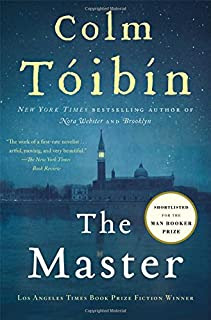
The Master by Colm Toibin

In The Master, Colm Toibin offers the reader a style and content quite different from his other novels. In a sense, the book is an act of homage to Henry James, a recognition of a creative debt, perhaps, owed by Colm Toibin to the great American writer. On another level, like Flaubert’s Parrot by Julian Barnes, it is an attempt to enter an iconic writer’s own creativity to highlight its insecurity and doubt. Current writers know full well that their offerings are rightly subject to critical analysis and comparison, with some critics apparently taking delight in automatically belittling contemporary efforts. But when we read a book that has achieved ‘classic’ status, we often forget that in its own time it was treated no more reverently than current new issues.

In The Master Colm Toibin manages to penetrate the creativity of Henry James, bringing his character to life via the creative process that seems to be at his very core. Thus The Master is part biography, part family history, part observation of late nineteenth century society in England, America and in expatriate enclaves in Europe. It remains a novel, however, and its main character a fiction, despite the historical reality of both the setting and the achievement.

And this becomes one of the book’s strengths. The story is a series of reflections from the past married with often apparently mundane family or personal events. Chapters are dated, beginning in 1895 and ending in 1899, but there is no linearity of plot, no story, as such, apart from the development of the writer as he responds to reflections on his family, life and relationships. At the start, a play of his has just failed. Oscar Wilde’s trial is in the news, commented upon alongside reports of London society and its opinions. It is here that Henry James laments the death of his sister, before soon describing his brother’s participation in the American Civil War, a war that he, himself, declined to fight.

A suicide, that of a fellow writer, Constance Fennimore Woolson, has a profound effect on him. She was in Venice, a city that James then visits to assist her relatives with the necessary details. As ever, he is less than effective. In a later encounter with a sculptor called Andersen, James again comes close to standing idly by as events run past him. The author is always on the outside, it seems, an apparently uninvolved, disinterested observer, always apart from experience he could potentially share. He prefers to retain this role, the observer, the listener, making as few comments as possible. He sees life as a mystery, with only sentences capable of beauty. Ultimately, Henry James is cast as a selfish absorber of other’s experience, the raw material he stores to regurgitate later as plot and content. He lives his own rather self-centered life through the recording and later embroidery of other’s experience, others’ emotion. His psyche is a writer’s notebook, with human contacts neatly entered and filed for later literary use, his own emotions not revealed, or perhaps suppressed, his presence predatory. The Master is a remarkable achievement, a book whose writing mimics Henry James’s own literal but complex style, itself a discipline. View this book on amazon The Master

Thursday, June 18, 2009

The White Tiger by Aravind Adiga

In his Booker Prize winning novel, The White Tiger, Aravind Adiga has achieved success where other illustrious writers have fallen short in recent years. Kiran Desai, Monica Ali and Salman Rushdie have all entered the fray and achieved considerable success of their own around themes rooted in the ramshackle, disorganised, free-for-all, cost-cutter basement of globalisation. Characters in their novels might live in New York or London, but their thoughts continue to live in rural south Asia. They might, through their labour, service the desires of the First World rich, but their personal priorities might remain rooted in the concerns of Third World poor. I accept that the grouping of these authors is unfair, since Salman Rushdie’s Shalimar The Clown is an overtly political book, whereas Monica Ali’s is largely domestic and Kiran Desai’s is familiar. But they do all share an overt interest in characters who have left their humble, Third World origins for a First World status that is less than desirable, though their motives might be diverse.

In The White Tiger, Aravind Adiga tries a different tack, and achieves much. The scenario is unlikely, deliberately comic. The book presents a narrative – apparently constructed in just seven evenings at a personal computer – by one Belram, a man with origins in a poor area of an Indian countryside he calls Darkness. Essentially, there are seven blogs or emails addressed to Wen Jiabao via the Premier’s Office, Beijing, China in which the first person narrator tells his story. Belram, presumably, believes that the Chinese people, via their leader, need advice on how to succeed in the globalised twenty-first century. Since Belram has indeed succeeded, he wants to share his experience as potential assistance to the most populous nation on earth. Belram’s rise can be listed without jeopardising the potential reader’s interest or involvement with the book. He was of utterly poor rural origin, but luckily – and also perhaps rather deviously – secured a job as a driver for the middle-class, urban Mr Ashok.

By the end of the tale Belram has his own business in Bangalore, a place as far from his own origins as any international destination. He now owns a taxi fleet that services the anti-social working hours of the growing city’s relocated call centres, whose First World cost-cutter owners provide the financial umbrella-shade in which budding entrepreneurs like Belram may shelter and prosper. Thus he eases himself a rung or two up the social and economic ladder. If only the elevation might have happened without treading on others… The White Tiger is a delightful and engaging book. The narrator’s humour and world-outlook are both entertaining and stimulating. The book’s improbable structure presents no problem whatsoever once Belram’s engaging style is established. His story is simple, devious, credible and incredible in one, and perhaps as close to a truth as one might ever approach. Literature is full of schemers and opportunists. Anti-heroes, however, rarely convince. Belram, on the other hand, almost demands we share his success via emulation, and I encourage all readers to enter his world on his terms. View this book on amazon The White Tiger

The Last Testament Of Oscar Wilde by Peter Ackroyd

A journal is being written by a lonely man in a Paris hotel room. It starts, for its sins, on 9 August 1900. There was nothing auspicious about the date, no connection to former grandeur or glory. But there has been a chance encounter, on a rare excursion outdoors, with three young Englishmen. They recognise the journal’s author, one Oscar Wilde, and they refer to him as “she”. It is an event worth recording, an event that prompts recollection and reflection on a life. Oscar Wilde’s life was lived in public. Through exploration, then success and fame, and finally via notoriety and disgrace the author occupied a public mind.

His talent was immense, his desire to exploit it almost single-minded and his success phenomenal. In an era when stardom in the modern sense was being invented, Oscar Wilde played the stage, published, courted society and self-promoted. He pushed at boundaries, sometimes not for reasons of art, but merely because they existed. He was, after all, an outsider, an Irishman of questionable parentage, but dressed elegantly in a frock coat and mingling with the highest. He thus became a star for a while, a centre of attention, a media figure.

This was nothing less than celebrity in the modern sense, except, of course, that in his case there actually was some talent and ability in the equation. He was famous primarily for what he did, not for whom he became. But then there was a change. The fame was rendered infamy by publicity he could no longer control. And that downfall killed him. A final journal entry on 30 November 1900, recorded from the author’s mumblings by a friend, Maurice Gilbert, records the event. Oscar Wilde had fallen while in prison, and had sustained an injury to an ear, an injury that festered. Early on in his recollections, Oscar Wilde recalls George Bernard Shaw saying that, “An Englishman will do whatever in the name of principle.”

Wilde’s qualification was that the principle was inevitably self-interest. It is a beautiful metaphor, because as a talented – even gifted – young Irish writer, Wilde was promoted and enjoyed success while ever he bolstered others’ positions. The moment he sought an assertion of his own right, however, he was disowned. Celebrity can thus rub shoulders with the rich and powerful, but only on their terms. And it was their terms that eventually killed him. The sybaritic Bosie encountered, the desire for things Greek aroused, Wilde found himself drawn into a society he could not resist.

But he remained a self-confessed voyeur, and never became a participant. He thus remained forever the outsider, on the periphery of even his own vices. But he was eventually pilloried for what he became in the public eye to stand for. It remained only a state to which he aspired, if, that is, we believe him. The Last Testament Of Oscar Wilde thus hops repeatedly across the boundary that separates a public and a private life. Eventually the two distinct existences become blurred. Because one is always trying to be the other, with neither predominating. Peter Ackroyd’s book is a masterpiece with much to say about thoroughly modern concepts such as populism, celebrity, fame and identity. View this book on amazon The Last Testament of Oscar Wilde

Saturday, May 16, 2009

The Book Of Evidence by John Banville

Freddie Montgomery, the central character of John Banville’s The Book Of Evidence, is an apparently complex man. The word ‘apparently’ is important because he has a tendency to cloak really quite simple actions in complex, sometimes convoluted narrative.

The Book Of Evidence has a strong plot, but one that is revealed only piecemeal in the form of what seem at first sight to be the random recollections of an imprisoned man. A potential reader would not want a listing of these details here, since the manner of their revelation is one of the most absorbing aspects of this beautifully crafted book.

As Freddie reveals his story, just a little at a time, we learn his motives and discover precisely what he has done to warrant his incarceration and trial. This jigsaw of history eventually fits together to reveal a series of events and relationships that were perhaps always confused. That’s life. Suffice it to say that there is a family history, an art collection, the theft of a painting and a murder, nothing less than the smashing of a woman’s head with a hammer. Piece that together with a gay bar, snippets of Ireland, police and prison and there is the basic framework of John Banville’s novel. 

t is the author’s use of language, however, that creates most of this book’s effect. Though never aspiring to difficulty for its own sake, the style is often complex, often employs convoluted sentences that meander their way to places their openings seem unable even to conceive. Their colour and effect make The Book Of Evidence a delight to read from beginning to end. But some time before the end, their effect may also be likened to the surface of a busy canvas whose almost fanatical attention to detail eventually drags attention away from the overall design. For some, the style might begin to grate.

Thus, by the end of the book, I felt that the stylistic invention had begun to dominate, to confuse, even obfuscate. There were powerful points to make about the character of Freddie, but the parts that adhered – sometimes randomly – to his outline rather confused the impression he made. There again, that might just have been the point, since he also eventually managed to convey a peculiarly individual, a strangely distant and detached relationship with his own actions and motives. In the end, we know just as much about Freddie as he wanted us to know.
View this book on amazon The Book of Evidence

Monday, May 4, 2009

The Line Of Beauty by Alan Hollinghurst

It can be no coincidence that Nick, the Oxford graduate who comes to stay, has the surname Guest. The Feddes invite him into their London home, Kensington Park Gardens, no less, because he has been a pal of their son, Toby, at university. Head of household, Gerald, is a Tory MP, elected by the good people of Barwick in Northamptonshire to represent their interests. It’s a county that always elects Tories, even when they close down the local steelworks, even when they candidates might appear unelectable.

Gerald, like everyone else in The Line Of Beauty, however, seems to be interested only in representing himself, a pursuit he achieves, again like everyone else, with partial competence. And then there’s Catherine, the Feddens’ unstable daughter who is on lithium, consistently referred to as librium within the family. Wani Ouradi, Antoine to officialdom, is the son of a Lord of Lebanese origin. The family owns a chain of supermarkets. Wani eventually has sufficient resources to buy up a piece of central London so that it can be redeveloped into premises to house a magazine venture destined from the start to sell no more than a copy or two. But then it will be something for Nick Guest to do with his spare time.

The characters in Nick Hollinghust’s book never really seem to be required to worry about the consequences of their actions. Leo is something different. He’s a council worker, and black, and not rich. An odd man out? He plays a significant role in the early part of the book, and later reappears when his family report he has dies of AIDS. The core of the book, it seems, is its sexuality. Nick Guest, along with several other characters, is gay. These people are not just homosexuals, however. They project an air of public display, men who wear their sexuality like a school tie. Perhaps they are not alone in that. So Nick has his fling with Leo. He has clearly flung with Toby and flings far and wide with Wani. The image of these rich young men having it off in smelly, locked lavs will live on after the book, but not for long. Nick regularly refers to Henry James, the quotations appearing like commentaries to the action.

Personally, the setting and characters reminded me more of Anthony Powell, who often inhabited similar social echelons. Powell’s characters can be every bit as devious, selfish, self-obsessed, fickle and ignorant as anyone in The Line Of Beauty. The difference, however, is that Powell’s upper crust speaks of misdemeanours in hushed tones. His is still an era of closets and his characters at least try to lock their skeletons therein. Alan Hollinghurst’s desirables, however, apparently want their skeletons in the shop window, mobile and, apparently, bent double before them.

And it’s not just the gay sex that’s traded, since cocaine and dope figure large as well, for the book inhabits the 1980s, the era when, we were told, wealth and riches flowed in the direction of merit, thus auto-confirming its sense of superiority and right. Eventually each of the intellectually muscled, self-seeking morons that populate The Line Of Beauty comes up against limitations. Some of these are personal, others beyond control. Scandal emerges and AIDS takes its toll of gay abandon. Nick’s guest status is questioned. He seems to take the blame for everyone else’s shortcomings. He seems to walk away saying, “Good while it lasted”, a motto that might have applied to the book, but it didn’t. The characters and their rarefied lives were eventually interesting, finally engaging.

Those things that Anthony Powell’s characters would have hidden are not only in the open but are flouted. And then, when comeuppance comes up, it seems that nothing will stick, nothing will damage any of them. And so this particular reader felt that their contribution to humanity might not reach the positive. Thus the story leaves a question. Is it voyeuristic, satirical, or merely horribly descriptive?
 View this book on amazon The Line of Beauty

Saturday, May 2, 2009

Love, etc by Julian Barnes

It’s hard to imagine a more perfect marriage of form and content than Love, etc, in which Julian Barnes continues the story of characters that came to life in Talking It Over. If, however, this marriage is fine, then equally the marriage of Gillian and Oliver is not. And neither, for that matter, was the previous one that temporarily joined Gillian and Stuart.  
Julian Barnes tells the story of this love triangle entirely in the first person. Gillian, Oliver and Stuart appear like talking heads on a screen to relate their own side of things. Since we left them at the end of Talking It Over, Stuart has moved to the States, where he has become a successful businessman and has found a new partner. Oliver, meanwhile, having won the hand of fair Gillian, has started his family but has fallen on hard times, an experience he seems to regard merely as a passing phase, except that it’s clearly not a phase and neither does it pass.

Re-enter Stuart, and thus the situation progresses. Occasionally, especially when the principal actors mention them, minor characters appear to have their often substantial say. There is an ex, a new girlfriend, an occasional mother. Also, the children have their say, their naiveté as confused as it is innocent, their vagueness inherited, perhaps, from their personal environment.

And so a story unfolds. Oliver is as full of theatre and bravura as he was throughout Talking It Over, but now it rings more of a bluff, a screen erected for self-protection rather than an extrovert’s sheen. Unemployment and illness seem to have exhausted him. Stuart, having made his fortune, is on an up and begins to reassert his desire to occupy the position he has always coveted, the space by Gillian’s side.

There are surprises in store, surprises for the characters and for the reader. But what Julian Barnes communicates with such subtlety, skill and ease are the inconsistencies of human character, the incongruities of events, the contradictions and deceptions of behaviour, and the illusions these confusions create. These people all act primarily out of self-interest. But then who doesn’t? That’s the point. And thus the process takes all of us to places we have all been, but have often failed to notice or acknowledge, even if we have admitted and recognised our motives, which most of us have not.

Love, etc is a brilliant book, brilliantly conceived and brilliantly executed with a lightness of touch that leaves us wholly surprised when we encounter a fundamentally serious point. The plot? Who cares?
 View this book on amazon Love, etc

Friday, April 17, 2009

Istanbul: Memories And The City by Orhan Pamuk

Near the opening of Istanbul: Memories And The City, Orhan Pamuk suggests that “at least once in a lifetime, self-reflection leads us to an examine the circumstances of our birth”, to examine family, identity and origins, perhaps to find if we might have deserved better. Thus this master prose applies his art, his skill to weave an intricate and detailed tapestry of a city with its history, customs, architecture and feel embroidered around the story of the writer’s early years, spent in a domesticity somehow short of bliss. 

The book, no doubt, is an instalment, since it ends with the young Orhan Pamuk out of college declaring he wants to be a writer. There remains, therefore, a lot of story yet to be told. There is a crucial concept, Pamuk tells us, needed to inform our experience of this place. It provides a clarifying lens that not only magnifies and intensifies, but also interprets. In Turkish it’s called hüzün, which roughly translates as melancholy. But it is not the melancholy of melancholia. It is not unhappiness, and is far removed from depression or anything else clinical. Orhan Pamuk returns to this word and its meaning throughout the text, but usually to skirt around its core, to illustrate rather than define. 

As I read Istanbul, the more I was convinced I was dealing with an idea that spanned both humanity and humility along one axis, married with reflection and mortality along another. The concept explains why this city, when seen through foreigner’s eyes, has been either a comment on history, a judgment on squalor, or a romance on the exotic. Whether it’s the engravings of Melling or the words of Flaubert, Western visitors have tended to exaggerate, to concentrate on things the locals take for granted, whilst ignoring those that fire them. Compared to local writers whose views are no less partial, it seems, the visitors tend to concentrate more on the picturesque, what can be observed and recorded rather than what can be felt or interpreted. Those born or living in the city are in contrast part of its fabric, conscious of its design, more able to follow a thread of meaning. Pamuk follows such a political thread through his book. 

The country’s modernisation under Ataturk is a constant theme. It was an ideology, Pamuk declares, that convinced his family that, as Westernised, positivist property-owners, they had the right to govern over semi-literates, and a mission to prevent them becoming too attached to their superstitions. Such acute and astute observation, laden with irony, is also revealed as having penetrated his own psyche. Elsewhere, he tells us that while he might remain uneasy about religious devotion, he, like the secular bourgeoisie in general, feared not God, but the potential fury of those who believed in Her too much. He also, quite early on, introduces the reader to his suspicion, nay fear, that he himself has a duplicate existence in another place elsewhere in the city, perhaps in the same form, but with a separate, independent identity.

Readers of Pamuk will notice here a theme that seems to pervade his work. The city itself has had at least three separate identities, all played out by different occupants, their origins in a multiplicity of cultures and places. And so it may be with the individual. He did not choose to be born into this identity, this skin, this psyche. By chance he might have a religious fanatic, a merchant, a Sultan, a boatman or a moderniser as a father, and any of the same – less Sultan – plus more as a mother. He might have changed direction in his own life, have become the architect he aimed for, have been a painter, or might have even married the first love who modelled for his portraits.

Throughout, he might have been someone else, or indeed have merely represented a type, a class, a privilege, a poverty. Are we discussing the individual, an individual, the writer, a writer or, as a generality, anyone who might or might have once lived in this place and thus adopted its identity? Thus lives, like places, are to be interpreted, reinvented by the eyes that view them. A writer, perhaps, invents nothing in his fiction, the production of which becomes merely a search for the self who, by accident of history, becomes fixed in an individual that remains, inevitably, in a state of change.

This beautiful, moving book, one hopes, is just the start of an autobiographical project. Like life itself, I anticipate a future whose attainment I possibly might live to regret. Hüzün. 

 View this book on amazon Istanbul: Memories of a City

Tuesday, February 10, 2009

When We Were Orphans by Kazuo Ishiguro

In When We Were Orphans Kazuo Ishiguro constructs the life of Christopher Banks via a series of episodes, ostensibly written by the character himself, between 1930 and 1958. We first meet Christopher as a young Cambridge graduate through his own recollections, recorded from a perspective of several years past. We discover how he was introduced to London’s elite society. It appears that he always hovers on the edge of this group, having neither the birthright nor the connections to penetrate its layers. He does have a pedigree, however. We find ourselves convinced of that from the start. He has already become a success in his chosen career. 

It was a Japanese boyhood friend who bought him a magnifying glass when he announced his ambition to be a private investigator, a detective whose individual effort would unearth truths the combined wisdom and talent of armies of police had overlooked. Thankfully, for it could never have succeeded, Kazuo Ishiguro resists the temptation to offer any forensic evidence to support Christopher’s claim of talent in the area. The character’s skill, achievement and eventual fame are therefore taken as read. This, I emphasise, is a strength of the book, not a weakness. 

 Christopher’s background provides the crucial setting for the book’s plot. He was born in the international settlement of Shanghai, his father an employee of one of the grand colonial era corporations. It is an era when fortunes are still being made from the opium trade, a trade Christopher’s mother vehemently and publicly opposes. The unconventional uncle Philip is an influence on the young boy, as is a Japanese friend, Akira, with whom Christopher seems to spend many hours in limited, rather competitive relationship. When Christopher’s father disappears, decisions are made about the boy’s future. 

One day Uncle Philip takes him out and leaves his in the care of strangers, orphaned. He is eventually well catered for, however, is brought up in England and goes to Cambridge. There have been worse fates. Many years later, Christopher Banks returns to a war-torn Shanghai to solve the mystery of his parents’ disappearance, which he does with unconvincing ease. But throughout, Christopher seems removed from, even above any reality that admits him. 

He seems to find precisely and only what he wants to find. He demonstrates a separateness that seems so aloof it even allows him to cross lines of conflict whilst apparently remaining above them. On more than one occasion, Ishiguro suggests that this might be naiveté. An interesting point… When We Were Orphans describes a life that began in an expatriate enclave. Christopher is thus perhaps a cultural orphan as well. He uses his detachment to advantage, but even he cannot fully comprehend the nature of his separation from his parents. When he has discovered all the facts, he realises that he was never less than central in other’s plans, despite remaining ignorant of their motives.

Kazuo Ishiguro’s book is engaging, but ultimately disappointing in that it does not seem able to sustain the momentum or the logic of its own plot. It is beautifully written, but well before the end Christopher Banks seems to retreat into a world of his own, far away from his reader.

View this book on amazon When We Were Orphans

Friday, January 9, 2009

The Yellow Rain by Julio Llamazares

The Yellow Rain by Julio Llamazares is thankfully a short novel that describes life, or rather the end of it, in a Pyrenean village called Ainielle. Andres, the book’s narrator, has lived there all his life in a house he calls Casa Sosas. By the time we meet him, he is reaching the end of his life, as is his village, since it is now almost deserted, abandoned by almost all who used to make a life of sorts there. Its economy has dwindled, its activity ceased. Andres remains there with his memories and shrinking present. 

 Andres relates the salient events in his life story through a series of reflections. These take the form of short monologues that allow neither dialogue nor, even reported, any words or reflections of others. Thus everything is filtered through the narrator’s highly partial, inwardly focused perspective. And through that one learns of suicide, betrayal, rejection, life, death, birth, marriage, estrangement and suffering, and all of these tinged with regret, borne of a feeling of deterioration and abandonment. 

The book’s theme is stated and restated, but it always stays the right side of repetition for repetition’s sake. What emerges is an impressionistic vision of unidirectional change for the worse. Thus the novel does not really have a plot, apart from Andres’s conscious preparation for his own inevitable end. Throughout the tone is desolate, with an occasional lightening as high as despair. 

But having said that, it is not a criticism of the book, since it achieves what is sets out to achieve in describing Ainielle’s and, within it, Andres’s own descent into non-being. Andres goes as far as digging his own grave to ensure an interment alongside his memories, most of which seem to be closely entwined with decay and tragedy. He describes the circumstances that led others to take their own lives, to suffer at the hand of an unforgiving environment. One feels that there were always options, but that the identity people shared in their isolated existence was too strong to reject. 

 The Yellow Rain is not a novel to pick up in search of light relief, but it is an engaging, well written and, in its English version, an especially well translated book. Its point may be quite one dimensional, but this transformation is vividly, sensitively and convincingly portrayed. The book is also succinct, short enough to avoid wallowing in its own slough of despond. Ainielle is now a ghost town, but still one worthy of exploration. 

 View this book on amazon The Yellow Rain

Tuesday, January 6, 2009

Asylum by Patrick McGrath

Asylum by Patrick McGrath is an intense study of self-obsession and self-interest. Narrated by and experienced from the point of view of Peter Cleave, a psychiatrist, we follow the development of a relationship between Stella Raphael and Edgar. Stella is married to Max, who is a clinical colleague of Peter’s in a mental hospital for the criminally insane where Edgar is a patient. 

Unlike Peter, Max finds his career, his marriage and his life somewhat stalled. Stella finds Max, her professionally challenged husband, something of a bore. She sees herself destined for something altogether more exciting, perhaps exclusive, than her husband can provide or inspire. A son, Charlie, seems to make his life in the gaps of his patents’ relationship. When Edgar, a patient committed to the penal psychiatric hospital in whose grounds the Raphael’s reside, responds to Stella’s playful dreams, events pull both of them inexorably towards destruction. The fact that Edgar’s crime was both horrifically violent and perpetrated against his then partner adds both tension and intrigue to the plot. 

 The relationship between Stella and Edgar develops initially via innuendo, but is soon explicitly recognised by both of them. On the face of things, Edgar is not manipulating her, but he would not be Edgar if he did not both see and take his chance. With Stella’s help, unwitting or otherwise, Edgar escapes. She meets up with him in London, encounters that are facilitated by a shadowy character called Nick. Stella is captivated by Edgar’s artistic talent. He is a sculptor, but he has a tendency and a history of destroying the objects he creates, especially those that he apparently holds the dearest. 

But Stella is attracted to him, becomes obsessed with him, moves in with him. Apparently she devotes her entire being to her lover to the extent that that she destroys her own family and herself to pursue her relationship with him. In the later stages of the destruction, she comes under the wing of Peter Cleave, who assists her to confront the unacceptable reality of her actions. Paradoxically, even through this professional association, self-interest comes to dominate in a fascinating and unexpected, if not altogether surprising way. Asylum is a highly concentrated but compelling read. It is a detailed, perhaps forensic analysis of Stella’s descent into an abyss of self-obsession. 

Eventually, this blocks out all reality and gives rise to an outcome which ought to provoke abhorrence, even from her. But in the end all she sees is herself. And, perhaps, in this respect she is not particularly anything special. 

 View this book on amazon Asylum

Ways Of Escape by Graham Greene

Ways Of Escape is one of the most rewarding and, surprisingly, surprising reads one might encounter. On the face of it, the book is Graham Greene’s artistic, literary autobiography. A second half and companion volume for A Sort Of Life, Ways Of Escape deals chronologically with Graham Greene’s works, his inspiration and his development as an author. All of this, we may believe as we start this book, is well known, well document, even public knowledge. 

Ways Of Escape reveals, however, that much of Greene’s inspiration was quite personal, often very private, and it is through this that surprise emerges. The book catalogues brilliantly the sometimes direct, sometimes loose relationship between experience and inspiration. Graham Greene is apparently candid about the nature of his invention. Whether it is achieved via amalgamation, imitation or juxtaposition, for the author it appears to be eventually rooted in experienced reality. 

What Ways Of Escape communicates above all is how much Graham Greene was occupied with his writing alongside a life that seemed already utterly packed with travel, journalism, various employment and risk, so packed that people encountered along the way could never have suspected that they were being analysed for their potential as future fictional characters. 

 Graham Greene is self-deprecating throughout, appearing to belittle his own work, thus showing little respect for the critical acclaim of others which, by the end of the period in question, was considerable. Many of the scenes from his work that he values seem to relate strongly to, perhaps clarify his own experience. And, for Graham Greene, experience was usually vivid and sought out to be so. He samples local prostitutes freely, drinks whatever is to hand and chemically alters the reality to which he otherwise seems to remain encountered as a participant rather than as an observer. 

 There are indicators to Greene’s ambivalence towards religion. He expresses respect for a simple, unquestioning faith. But he despises a middle class, “suburban” Catholicism that seems to assume an ownership of God. Greene, of course, belonged to that latter group by virtue of class, education and marriage, but one feels he yearned for a simple, stated and genuflecting responsibility to an omnipotent God. One also feels that this might be Romanticism, a desire to become an ideal to which he feels he may only aspire as a result of the mired filth of the life he perceives he lives. He relates some of his contact with the press, as well as with film. 

There are brushes with the law in the form of libel actions. Throughout, one feels his respect for his fellow professionals is at best limited. He even describes the word “media” as applicable to bad journalism, clearly placing himself above the label. But above all it is experienced reality that provides the gems. His description of bombardment in Sinai rings both true and vivid. “I remembered the blitz, but the blitz had one great advantage – the pubs remained open.” Such attention to detail alongside direct experience is what brings Graham Greene’s prose to life, and it is this rooting in the reality of experience that prods the reader into reaction. 

This is a masterwork by a master technician. But it is the book’s epilogue that, for me, provided a supremely apt and yet provocative coda. Here is a man who has imagined others, given them life in print and film, a man who seems to have little confidence in his own ability or thought for his consequence. And, we learn, he is a man who might even be someone else, someone who claims to be him, an Other. The juxtaposition of this idea with a life lived is both thought-provoking and disturbing – a masterstroke by a master of his craft, even his art. 

 View this book on amazon Ways of Escape (Vintage Classics)

Lord Of The Flies by William Golding

A review of a book as iconic as Lord Of The Flies should surely only offer comment, not mere description. It is over fifty years since its publication in 1954 and, it should be remembered, the story is set in wartime. So, while the marooned boys apparently descend into a mould of pre-civilised behaviour, their adult compatriots are engaged in it full time in the world outside. Jack may paint his face and display an identifying insignia, but so, probably, does his father at that time, a display he might call a uniform, and the insignia a flag or regimental banner.

It is perhaps coincidence that William Golding casts a casualty of the nearby war, dead, but re-animated by natural elements, the wind in his parachute, as the intruding beast that terrorises the stranded boys. Where this imagery falls down, of course, is at the end, when a suitably British naval officer rescues the lads. We assume they will promptly be returned to their besieged wartime homeland, no doubt to live happily ever after.

Of course, there is the question of who saves the adults, whose war is the merely the same as the boys’ limited creation on their island. But this element of the book perhaps reads less convincingly fifty years on from its publication, when the general reader would have needed no reminder of how horrid an experience the recent war had been.

Ralph’s character poses something of a dilemma. He clearly believes he was born to lead. When he finds his authority both undermined and then by-passed, it appears he cannot cope with the demotion, his continued assumption of status blinding him to the obvious. At the time this surely would have been interpreted as a reference to the British class system.

Fifty years on, the allusion is less than obvious. If anything, Piggy presents the modern reader with the most problems. He is the epitome of the know-all, the swot, the annoying brat that always has something to say. But he is also the idealist and realist in one. He has few skills, perhaps fewer physical contributions to make to the group’s survival. But he has a technological vision. He is an inventor of ideas, ideas that others, under direction, may realise. Hence he is also the visionary, the philosopher who not only knows what should be done, but also why it should be done. Significantly, his spectacles provide the only technology the community needs since, unbelievably for the period, none of them seems ever to have been a boy scout and so they cannot make fire. But it is eventually Piggy, for all his analytical and intellectual skills, who seems a total prisoner of stereotypical assumptions. He seems to assume that “British” is a synonym for “civilised” and that all black people are automatically savage. 

The reader is left in some doubt as to whether these opinions are sincerely held, satirical, representative of the society from which the boy hails or merely hyperbole promoted by the panic of their situation. To some extent, they have to be accepted and dealt with rather like an opera-goer must accept Wagner’s anti-Semitism as historical fact, rather than essential opinion. Lord Of The Flies has weathered its half century remarkably well, but there are flaws which now seem more obvious than they would have been in the years that followed the book’s publication. The power of the book’s observation, however, remains. It is already iconic, its permanence assured.

Brick Lane by Monica Ali

A review should always try to address its subject in its own terms. The purpose, after all, is many-sided, to summarise, paraphrase, contextualise, all with the express intention of informing a potentially interested participant of the nature of the experience on offer. Any proffered review that merely says I did or did not like it is thus entirely specious, since it conveys nothing of the work in focus, only the doubly-uninterpretable reaction of a dismembered, effectively anonymous opinion.

So in the case of Brick Lane by Monica Ali a dutiful list of the elements must begin with the setting. For the majority non-Londoners, Brick Lane is a market street in East London. It is just up the road from the eastern fringes of the City of London, the financial centre that boasts gleaming towers and vast wealth. (Or perhaps it once did!)

But over the years Brick Lane has been a magnet for new migrants, communities marginalised by both origin and destination. It has also been a centre for political action of all shades. The current occupants of this social clearing house are Bangladeshis and the street, in particular, has become a centre for Bangladeshi culture and food.

So, at the centre of Monica Ali’s novel is a Bangladeshi woman, Nazneen, who arrives in Britain to meet her husband, Chanu, an apparently slobbering slob, imbued with more social manners than domestic. But arrangement suffices, as Nazneen learns to cope with married life in a foreign place in which she has no ties and little communication. Nazneen’s experience in London’s Brick Lane is juxtaposed via an exchange of letters with the parallel experience of Hasina, her sister in Bangladesh. The two women’s experiences eventually diverge as local pressures demand decision and action. The contrasts, along with the considered tensions between white working class racism and Muslim identity promotion in east London ought to provide a powerful vehicle with which to explore worlds of culture, experience, relationships and ideology.

Brick Lane, unfortunately, falls short of every destination. Unfortunately again, the characters are weak, the artifice feels false, the vibrant location is portrayed as dull and the passions of ideological difference are confused and politically limp or naive. Brick Lane was an ambitious project, but it began confused and lost direction as it progressed. It does have its moments, but its hours are long, and not a little tedious.

View this book on amazon Brick Lane

The Fall Of Troy by Peter Ackroyd

In The Fall Of Troy, Peter Ackroyd explores some grand themes against a backdrop of a grander history, but always from the narrowed view of an obsession that denies experience.

The story is set in the early twentieth century, a period of great and fast discovery of ancient sites. It is also a time when archaeology is being transformed from a pastime of those with time on their hands to a science for professionals. Obermann has his mission, an overbearing, all-consuming obsession that drives him to uncover ancient Troy. He knows where to look. In defiance of received wisdom, he demonstrates the accuracy and veracity of his assertions. 

He feels things to be correct, admits no question and seeks to edit all dissent from any discussion. Enthusiasm feeds obsession, while obsession drives the man, excluding others. He has a track history of success, however, so when he pontificates about the whereabouts of the lost city, others tend to listen, despite his ideas appearing at best off-beat.

Obermann has taken a new wife, a young and attractive Greek woman called Sophia. She reads ancient Greek, so she can recite Homer to her new husband in the hours that cannot be devoted either to practical archaeology, of which we learn much, or marital duties, of which we learn nothing. She becomes a member of his team, entrusted if not actively enlightened, and soon learns how certain discoveries of her husband need to be sanitised to protect them from the gaze of their resident Turkish official, who is burdened with the task of inspecting all finds. She learns, also, how not to question the wisdom of her husband, a wisdom apparently founded in myth, expressed via whim and summing to obsession, but which is invariably correct. Until, that is, visitors appear.

There is a Harvard academic called Brand and an English vicar. Then there is Thornton from The British Museum. These visitors join Obermann and his wife, alongside a self-confessed Frenchman and a young man the boss calls Telemachus, who helps, but whose motivation remains suitably opaque. But Obermann always dominates. Sophia becomes a new Helen of Troy while her husband’s assumptions are elevated to a religion he must live or be punished by.

As the dig progresses, finds appear, are sometimes revealed, sometimes not, and are interpreted, discussed, even fought over. If the resulting ideas conform to Obermann’s assumptions, harmony is publicly maintained. But if contradicted, the archaeologist appears to have the power to conjure divine retribution upon his critics. He is a man of the gods. But eventually he is revealed as a man of the world. Sophia, the new wife, discovers a reality she never expected. She acts decisively when things come to a head but, as far as Obermann is concerned, it is the gods, perhaps, who play the last card.

View this book on amazon The Fall of Troy

Sunday, December 7, 2008

Day Seven of Forever Friends

Forever Friends Blog Tour


Thank you for reading this blog entry! This is the seventh post on the Forever Friends blog tour and we have made it through the first week! Thanks again to everyone following the tour for your support! I hope the next seven days are as enjoyable and eventful as the last seven days. On Tuesday, the book finally became available at the amazing price of $9.99. This was a mistake made by amazon.com that allowed many members of the Published Authors Network and forum to take advantage of their mistake. You will find a link to amazon.com at the bottom of this post. The same day the book became available from all the online bookstores, I received the first review of Forever Friends by Apex Reviews.


In the review, the reviewer, Linda Waterson referred to the different sections in the book:


Compiled in various sections, ranging from “Family Friends” to “Lost Friends” to “False Friends” to “Spiritual Friends,” the literary offerings contained therein just as equally travel the full spectrum of friendship, covering all imaginable ground in-between. There is reminiscing over childhood heroes, protectors of the four-legged ilk, and gracious musings over friends who were – quite literally – lifesavers. There are also poems that wish for the spreading of global goodwill, as well as verses rendered in homage to friends that are gone, but not forgotten.


She also made reference to the use of quotes at the beginning of each section:

For added contextual flavor, preceding each section is an insightful blurb helping to foster within the reader a greater understanding of what that particular facet of friendship is really all about. Consider, for example, this literary jewel that precedes the “False Friends” section:


False friends are like our shadow, keeping close to us while we

walk in the sunshine, but leaving us the instant we cross into the shade.


Christian Nestell Bovee


Philip Spires short story, Stranger than Friends, is the first book in this section. The well-crafted characterizations and authentic dialogue make for an entertaining read. The boredom of the staff and the insensitivity of the clientele in the bar of the Old Hotel in an off the track village, are all too obvious to an unmarried couple staying at the hotel overnight. In the morning, things have come to a head and one family will not be the same as it was the night before as people who were once friends become strangers to each other. I would like to congratulate Philip on a story that draws in the reader right from the beginning as two strangers descend the steep path to a small tightly-knit place, where outsiders are welcome – but only for a short stay.


I would also like to thank Philip for inviting me to make this post on his blog and for giving me the opportunity to add a bit more information about the anthology.


It isn’t too late to order a copy and, as I keep saying, you will not be disappointed!


Forever Friends is available now from all major online stores, including amazon.com:


Forever Friends


and barnesandnoble.com:


Forever Friends


Thanks again for reading this and best wishes for the holiday season!


Shelagh Watkins


Please follow the tour to learn more about the book.


Blog Tour


December 1 Chelle Cordero

December 2 Zada Connaway

December 3 Mary Muhammad

December 4 Helen Wisocki

December 5 Pam Robertson

December 6 Dick Stodghill

December 7 Philip Spires

December 8 Milena Gomez

December 9 L. Sue Durkin

December 10 A. Ahad

December 11 Malcolm R. Campbell

December 12 Lynn C. Johnston

December 13 Dianne Sagan

December 14 Donald James Parker

December 15 Karina Kantas

December 16 Grace Bridges

December 17 Tiziana Rinaldi Castro

December 18 Yvonne Oots

December 19 Dana Rettig

Thursday, December 4, 2008

Over By Christmas by William Daysh

Over By Christmas by William Daysh is a war novel. It is also a superb novel in which real events, imagined histories, human relationships and politics intertwine. These elements are combined via a beautifully paced narrative whose use of multiple forms only adds to its clarity.

While naval battles of the first half of World War One are described, we encounter some of the politics that generate their necessity. We see the in-fighting and posturing around the desire to avoid responsibility. We share the priority of a Prime Minister who, amidst the pressure of decision, remains obsessed with a young woman – and not for the first time! – a woman to whom he is compelled to write, often several times a day. There are numerous factual reports of the war. These provide the background, the context to allow us to position the experience of the book’s characters.

And central to these are the Royals, not the rulers in London, but a naval family in Gosport, Portsmouth. Jack the father and George the son are seamen, while Emily, wife and mother, is their home port. In his spare time, which seems to be quite sparse, George is a bit of a lad. He is a handsome, honest type who falls for two girls in particular, Carrie and Carla. The first is a single mother, left encumbered but compensated by a period of “service”. The latter, a minor character with a major role, is a dusky-skinned, half-Italian shop assistant.

And then there’s Bill, who takes up with Carrie, and then later with a Mr Paxman to further his growing business interests. But throughout there is the war. Throughout there is the threat of suffering alongside the daily reality of early death, the hell of battle. War, and especially this one, claims many lives and takes them arbitrarily, though never without loss for those who survive. The wounded, it seems, sometimes have to cope with more than death.

George emerges as the central character of Over By Christmas. We follow him repeatedly to and from Portsmouth. He sees The Pacific and the South Atlantic. He sails around Britain into the North Sea. He is in Malta and Gallipoli. Above all, he is in the war, perhaps not muddied in trenches, but permanently threatened by torpedo, shell and sea. He makes friends, is loyal, and gallant and is promoted. But throughout, his passion for Carrie remains. Chances to reconcile their differences, to realise their shared love are rare, but important moments. And then… And then this is the beauty of Over By Christmas. 

The narrative engages the reader in its characters’ lives. In twists and turn it surprises, but in the end we have merely the complications of human relationships. Warfare is about sparring, about conflict, imagined gains and suffered losses. Affairs of the heart may demonstrate strikingly similar qualities.

View this book on amazon Over By Christmas

Saturday, November 22, 2008

Pain Wears No Mask by Nik Morton

Pain Wears No Mask by Nik Morton is no ordinary thriller. It has an extra dimension that constantly encourages the reader to take an interest in more than a tale of events. It is the book’s central character that provides this extra dimension, because she seems to have two quite different identities. One provides the content of her tale, while the other informs her approach and motives. 

 As Maggie Weaver, the book’s first person narrator is a policewoman in Newcastle. She is devoted to her husband, also a policeman, and is utterly involved with her work. Like many honest, hard-working law enforcers, Maggie is angered at the suffering of the victims of crime and outraged at the ability of the guilty to avoid punishment. Even greater ire is reserved for the bent cops that facilitate both outcomes.

When Maggie Weaver, the policewoman becomes involved in a particularly brutal case, the final outcome affects herself personally, her marriage and her colleagues. The case is resolved, partially, but the mayhem it generates has permanent consequences.

Sister Rose works in a hostel for the homeless in south London. She has adopted her vocation as a mature woman, trained, taken vows and spent a couple of years as a missionary in Peru. It was there, high in the Andes, working with poor people who have to scratch for a living, that she truly understands the nature of her vocation. When, back in London, Sister Rose finds herself by chance involved in a complex, multiple crime, she resolves to accept the challenge to become involved, to pursue her privately-informed investigation of events.

Sister Rose, the compassionate nun, and Maggie Weaver, the experienced crime fighter and policewoman are, of course, the same person. Maggie’s and Rose’s stories are not presented sequentially, however. Nik Morton begins with the London crime which gradually reveals its relevance to what befell Maggie in Newcastle years before. Thus, both in form and content Pain Wears No Mask transcends its genre. Because of this the reader finds that Sister rose’s future is also as interesting as her related past. When, via Peru, the story returns to Newcastle to confront the unfinished business of years before, Maggie and Rose combine talents, approaches and identities when events promise the settling of old scores and the possibility of reaching beyond the mere foot-soldiers of injustice. 

 Pain Wears No Mask is a well written, intriguing story. It will entertain those used to its genre, but it will also provide interest for the general reader.

View this book on amazon Pain Wears No Mask

Notes On A Scandal by Zoë Heller

In Notes On A Scandal, Zoë Heller presents a novel narrated by Barbara Covett, a history teacher in St. George’s, a comprehensive school in north London. When Bethsheba Hart joins the staff as a pottery teacher, Barbara realises that a special person may just have entered her life. Sheba seems to be much that Barbara is not. She is younger, attractive, apparently free-thinking, married, has children and is irretrievably middle class. What she is not, unfortunately, is an experienced teacher, having trained only after bringing two children into adolescence. She is thus going to find life at St. George’s rather tough.

For reasons best known to herself, the sixty-ish, self-assessed “frumpy” Barbara decides to keep a journal. Sheba figures in its pages and eventually comes to dominate them. It is an out of character pastime, perhaps, since Barbara seems to have little but contempt for her colleagues, and survives her educator’s role by constantly keeping her students at arm’s length. Perhaps this is what Barbara has done with every aspect of her life, despised it and shunned it in one. Strange, then, that Sheba, her character, her actions, even her words come to dominate Barbara’s thoughts.

Like many who meet this new teacher, Barbara becomes apparently infatuated with this elegant, apparently free spirit. And also, we learn, does one of her pupils, a fifteen year old boy called Stephen. Sheba, of course, is not the confident, satisfied, fulfilled dominatrix that others invent. She is a vulnerable, not quite organised mother of two. The elder daughter is a difficult teenager, the younger son disabled. Her husband is considerably older than her. Like Barbara, she also suppresses emotion, suppresses it, that is, until it takes over her life with abandon as her relationship with the boy simultaneously fulfils both reality and fantasy.

It lasts for several months before it inevitably comes to light. Barbara’s role, throughout, is central. She is in the know. She is watching. She is not in control, of course, but exercises considerably more power than an onlooker. And when, eventually, the muck hits the fan, Barbara, who has done her share of the slinging, gets hit by some of the fall-out. The denouement is both surprising and logical. Though it is Sheba’s motives that the police, the national press and her colleagues want to dissect, it is Barbara’s that must interest the reader. She as been an informed, motivated diarist, it seems.

View this book on amazon Notes on a Scandal

A Sunday At The Pool In Kigali by Gil Courtemanche

For me, Gil Courtemanche’s book, A Sunday At The Pool In Kigali, bore a great similarity to the screenplay for the film Hotel Rwanda. Having seen the film twice, it is a positive statement about the book to state that I did not make the association until almost two thirds of the way through. On the other hand, much of the material I did not associate with the film verged on the prurient or scatological. Much of what rose above this level eventually depressed, because it addressed like an obsession the detail, the consequences and the pathology of AIDS. The doubly unfortunate truth about the last two sentences is that the book probably, in its excesses, under-states the reality.

An enduring memory is a character, a visitor to Rwanda, seeing what he takes to be a cultivated hillside and then praising effusively the presence of agriculture in the centre of town A moment later he is introduced to reality by his host who confirmed that the excavation was a cemetery to cultivate the profusions of corpses produced by AIDS. The scenes of genocide that follow can only match the horror of what went before.

At the core of the book is the relationship between Valcourt and Gentille. He is Canadian, a journalist film-maker, who seems at home in Rwanda’s tribulations. Gentile is a woman of virtue, a virtue she plies with ease. She looks like a Tutsi, but is a Hutu. In some ways their relationship mirrors the colonial heritage that at least exacerbated, if perhaps not actually caused the potential for ethnic conflict that eventually ignited so disastrously.

But A Sunday At The Pool In Kigali points to social divisions in an apparently valueless community that sees other people, both collectively and individually, merely as the exploitable given form. There’s not a lot of joy here, even in the book’s copious sex that seems, anaesthetised, to dominate much of the text. But overall there is little to uplift in the book. Almost no-one offers love or compassion. An almost unrelenting torrent of cynicism, abuse, persecution and social degeneration floods from every page. It is a portrait of an almost uncompromisingly ugly and abhorrent experience.

The book is thus an often one-paced, one-dimensional read. The problem, unfortunately, is that it might be accurate.

View this book on amazon A Sunday at the Pool in Kigali

Friday, October 24, 2008

The Destiny Of Natalie X by William Boyd

An aspect of William Boyd’s writing that always seems close to the surface of his work is an examination of selfishness. At the very least, his characters fulfil their self-interest. One recalls how the events of The New Confessions or Any Human Heart unfold, how in both cases the central character’s aspirations are forever paramount, often to the detriment of those he proclaims to love. But it is probably in his short stories that this theme is best illustrated and his collection, The Destiny Of Natalie X, does precisely that.

Two of the stories, The Dream Lover and Alpes Maritimes, in just twenty pages each, pursue there ideas in depth. In the first, a student in a south of France university is envious of the obvious wealth and easy-going lifestyle of an American fellow student. This well-heeled American splashes money around, advertises his talents and gets the girls – at least in theory. He even has a desirable Afghan coat. By the end of the story, the narrator has utterly reversed the roles. Not only does he come out on top financially, he goes off with the girl, and even gets the coat. In addition, he has benefited from the other’s profligacy along the way.

Another side of selfishness is expressed via responses to temptation, specifically to the proximity of opportunity. Even a man in a stable, happy relationship cannot avoid speculating what a taste of something different might bring. The possibility that it might sour everything else is, of course, never contemplated. In Alpes Maritimes a lusty young man just cannot resist the idea that grass is greener on the other side of the twins. His partner is one twin, his desire might be the other. He years to sample what he seems to see as the merchandise. So while it is in progress, William Boyd suggests that life may be a neurotic search for ever greater fulfilment, even if that is only imagined. Future promise, it seems, always surpasses experience.

When it is ended, however, life seems inconsequential. We live, we love, we dream, we die. And we are soon forgotten, even the turbulence of the journey is soon smoothed. Those with whom we have shared our lives may remember us for a while, but even memory, it seems, is founded in self-interest. Perhaps memory of a deceased is the livings’ mechanism of coping with their own future.

The Destiny Of Natalie X, the title story, deals with the making of a film. It addresses pretence and the inflation of egos. But it also makes us think of the mundane and how, for every individual, it remains special, the only possible existence. As ever, William Boyd uses many different forms to express his ideas. For some readers this variability may get in the way of appreciation of the material. But rest assured, the material is worth the challenge and, if it forms a barrier, then the stories are worth several readings until their challenges are overcome.